Results
The Potential of Multibeam Sonars as 3D Turbidity and SPM Monitoring Tool in the North Sea
Read more
Authors: Nore Praet, Tim Collart, Anouk Ollevier, Marc Roche, Koen Degrendele, Maarten De Rijcke, Peter Urban, Thomas Vandorpe
Abstract:
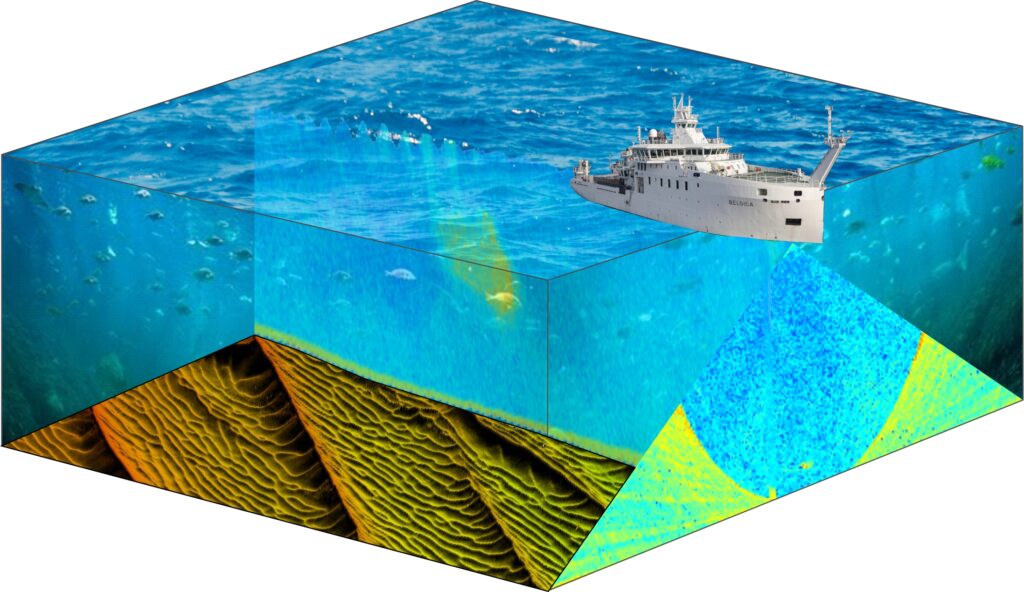
Monitoring turbidity is essential for sustainable coastal management because an increase in turbidity leading to diminishing water clarity has a detrimental ecological impact. Turbidity in coastal waters is strongly dependent on the concentration and physical properties of particles in the water column. In the Belgian part of the North Sea, turbidity and suspended particulate matter (SPM) concentrations have been monitored for decades by satellite remote sensing, but this technique only focuses on the surface layer of the water column. Within the water column, turbidity and SPM concentrations are measured in stations or transects with a suite of optical and acoustic sensors. However, the dynamic nature of SPM variability in coastal areas and the recent construction of offshore windmill parks and dredging and dumping activities justifies the need to monitor natural and human-induced SPM variability in 3D instead. A possible solution lies in modern multibeam echosounders (MBES), which, in addition to seafloor bathymetry data, are also able to deliver acoustic backscatter data from the water column. This study investigates the potential of MBES as a 3D turbidity and SPM monitoring tool. For this purpose, a novel empirical approach is developed, in which 3D MBES water column and in-situ optical sensor datasets were collected during ship transects to yield an empirical relation using linear regression modeling. This relationship was then used to predict SPM volume concentrations from the 3D acoustic measurements, which were further converted to SPM mass concentrations using calculated densities. Our results show that these converted mean mass concentrations at the Kwinte and Westdiep swale areas are within the limits of the reported yearly averages. Moreover, they are in the same order of magnitude as the measured mass concentrations from Niskin water samples during each campaign. While there is still need for further improvement of acquisition and processing workflows, this study presents a promising approach for converting MBES water column data to turbidity and SPM measurements. This opens possibilities for improving future monitoring tools, both in scientific and industrial sectors.
Outreach
September 2025 – PiE (Particles in Europe)
After more than a year of organizing, Flanders Marine Institute (VLIZ) hosted from 17-19 September 2025 the 8th international Particles in Europe (PiE) conference in Ostend. This was a collaboration with Sequoia Scientific Inc., Flanders Hydraulics and the Royal Belgian Institute of Natural Sciences. PiE2025 brought together some of the leading experts in aquatic particles. This interdisciplinary conference was not limited to specific technologies or fields of study, serving as a hotspot for all those passionate about measuring, monitoring, modelling or imaging plankton, sediment or microplastic particles across oceans, estuaries, rivers, lakes and beyond. We welcomed over 50 participants – researchers, students, practitioners – coming from all corners of the world.
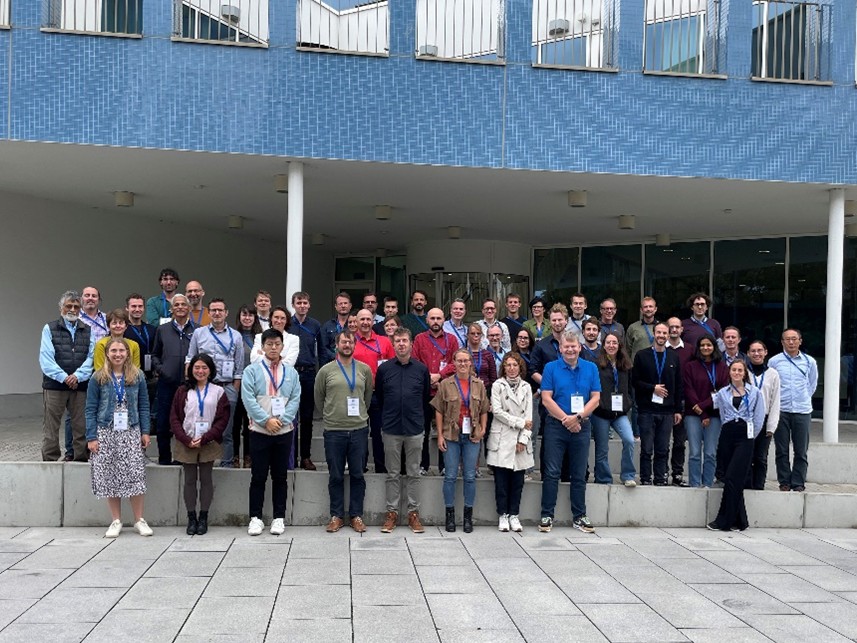
The event was not only aimed at particle-interested oceanographers, but we were able to receive sponsoring from local companies (Jan De Nul Group and DEME Group) and we showcased several exhibitioners (Sequoia Scientific, Olpas, Rovin, TECPRIME, Analis and Drift Hydro).
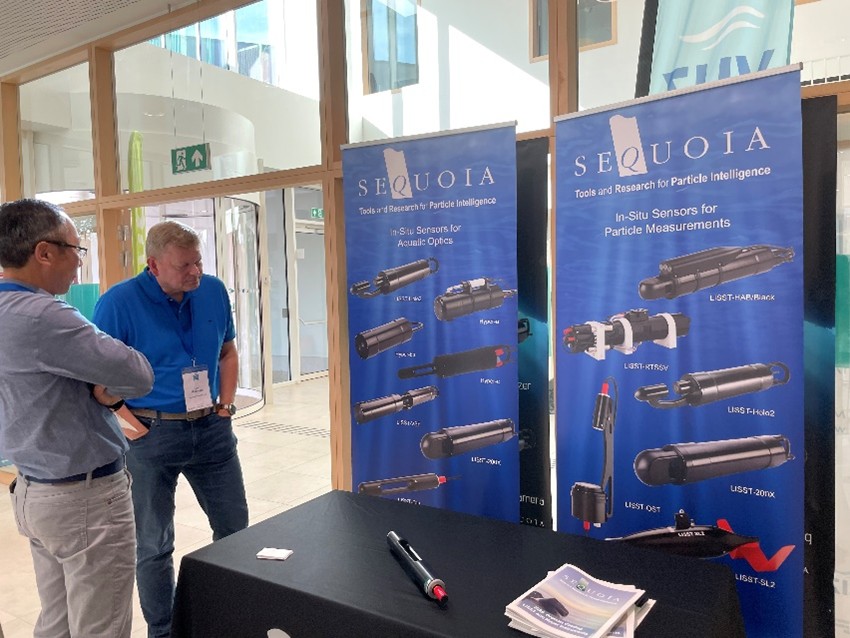
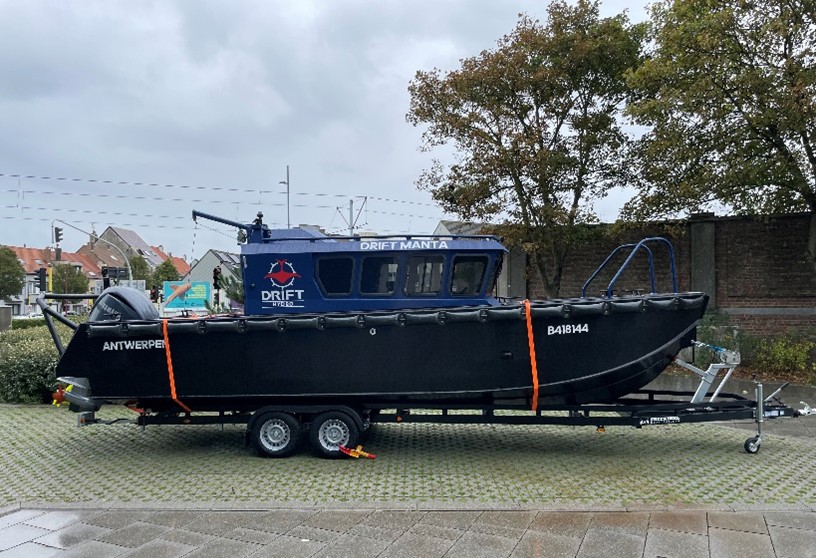
The seed of bringing PiE to Belgium was planted in Crete 2 years ago during the 2023 PiE conference. More than 3000 km from here, Belgium scientist Nore Praet, working at Flandres Marine Institute, and Yves Plancke, working at Flanders Hydraulics, met each other and discovered that they were working on similar topics, surprisingly without knowing each other. This inspiring encounter resulted in 2024 in the organization of the first (TURBEAMS-sponsored) Particles in Belgium (PiB) one-day meeting where more than 40 researches from different Belgian institutes came together to share their work on particle dynamics. The success of this local event sparked the ambition to aim higher. Flanders Marine Institute, Flanders Hydraulics and the Institute of Natural Sciences joined forces to bring Particles in Europe for the first time to Belgium. Thanks to the support of Ole, CEO of Sequoia, the PiE2025 conference became a reality.
Over the course of three days, we were immersed in 37 captivating talks and poster presentations, including keynotes from Dr. Brent Law (Fisheries and Oceans, Canada) and professor Teresa Serra (Universidad de Girona, Spain), who discussed particle dynamics in marine environments and coastal ecosystems, respectively.
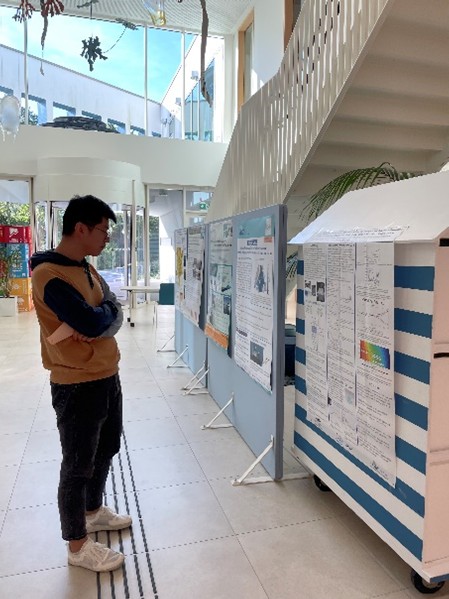
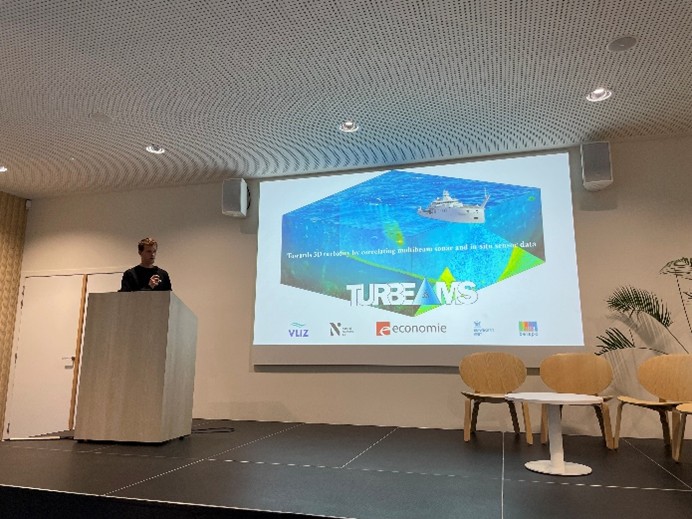
Regarding the TURBEAMS involvement in PiE, Thomas Vandorpe presented TURBEAMS results focusing on the development of the PING software, the machine learning methods and the potential of plankton imaging tools in particle research. In addition, Nore Praet served as lead organizer and chaired the session titled “Methods for Particle and Sediment Characterization”.
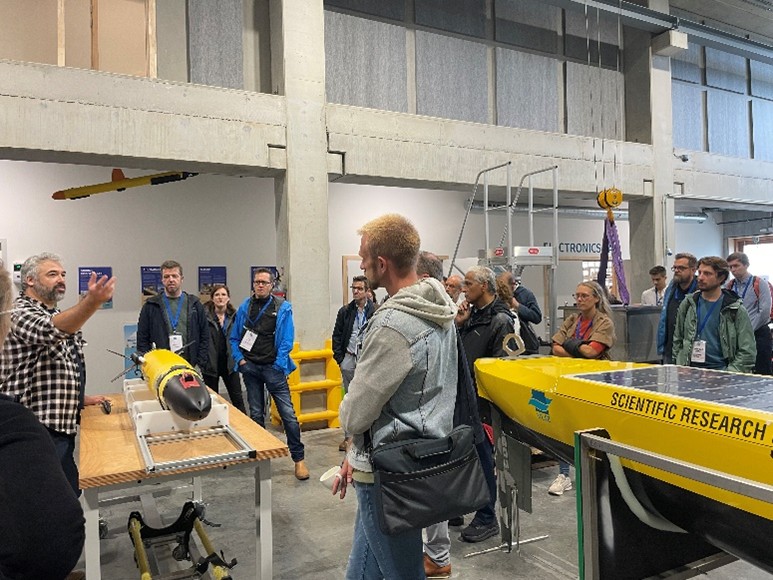
PiE2025 was not only about exploring the fascinating world of particle research, but also about strengthening the community of particle scientists, which in turn is beneficial for TURBEAMS. To foster this spirit, we organized an afternoon excursion on day 2. Our program began with a visit to the Marine Robotics Centre (VLIZ), followed by a tour of the Flanders Maritime Laboratory.
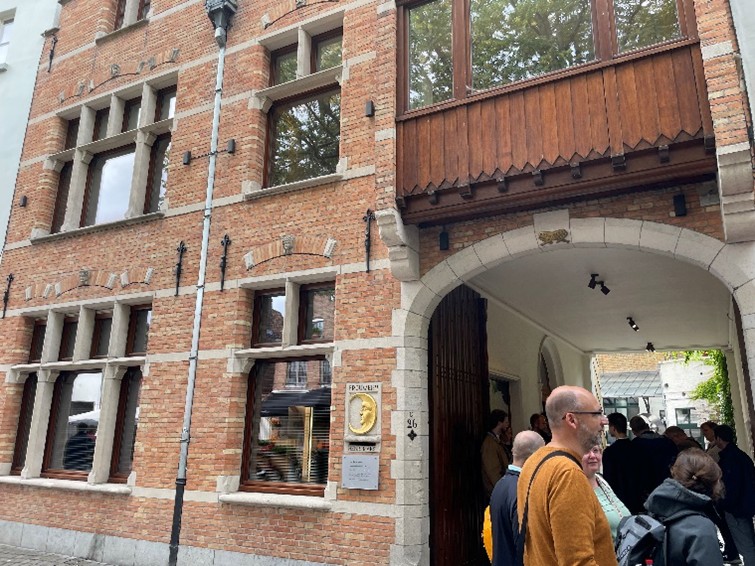
Afterwards, we travelled to Brugge for a guided walking tour, which concluded with the conference dinner at Brouwerij De Halve Maan.
24-11-2024 – Dag van de Wetenschappen
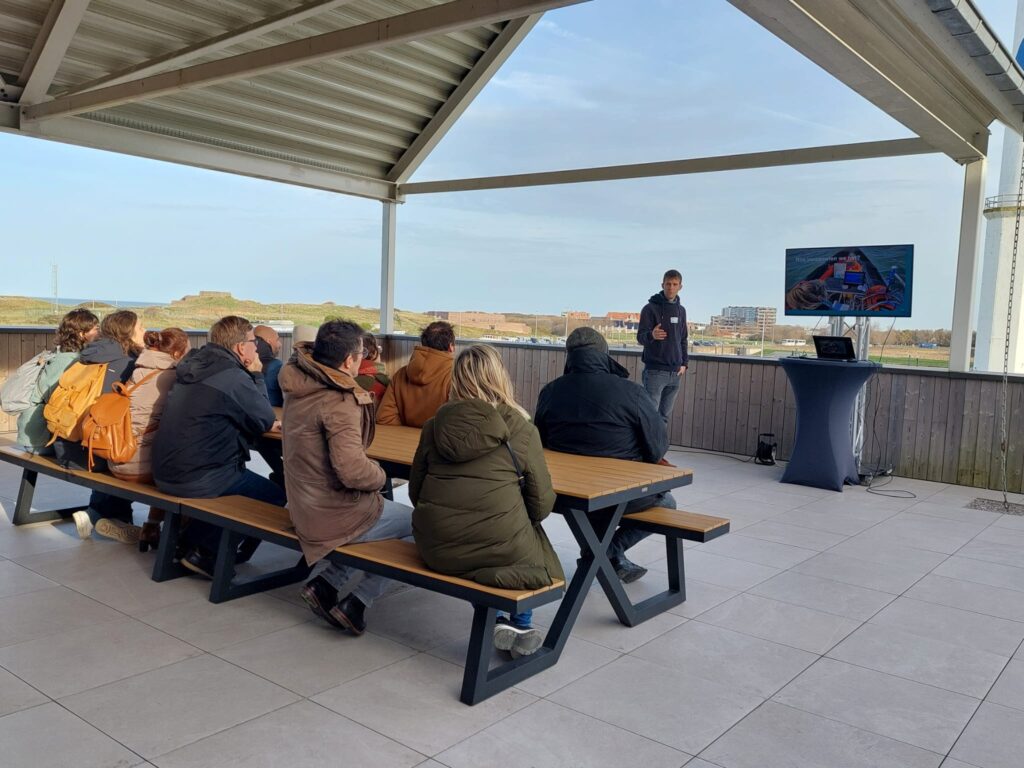
Turbeams was present on the Day of Science (“Dag van de Wetenschappen” ) in Ostend on 24/11/2024. A demo on the acquisition of 3D data from the water column was given, along with research applications. Turbeams was presented to a wider audience during this event.